
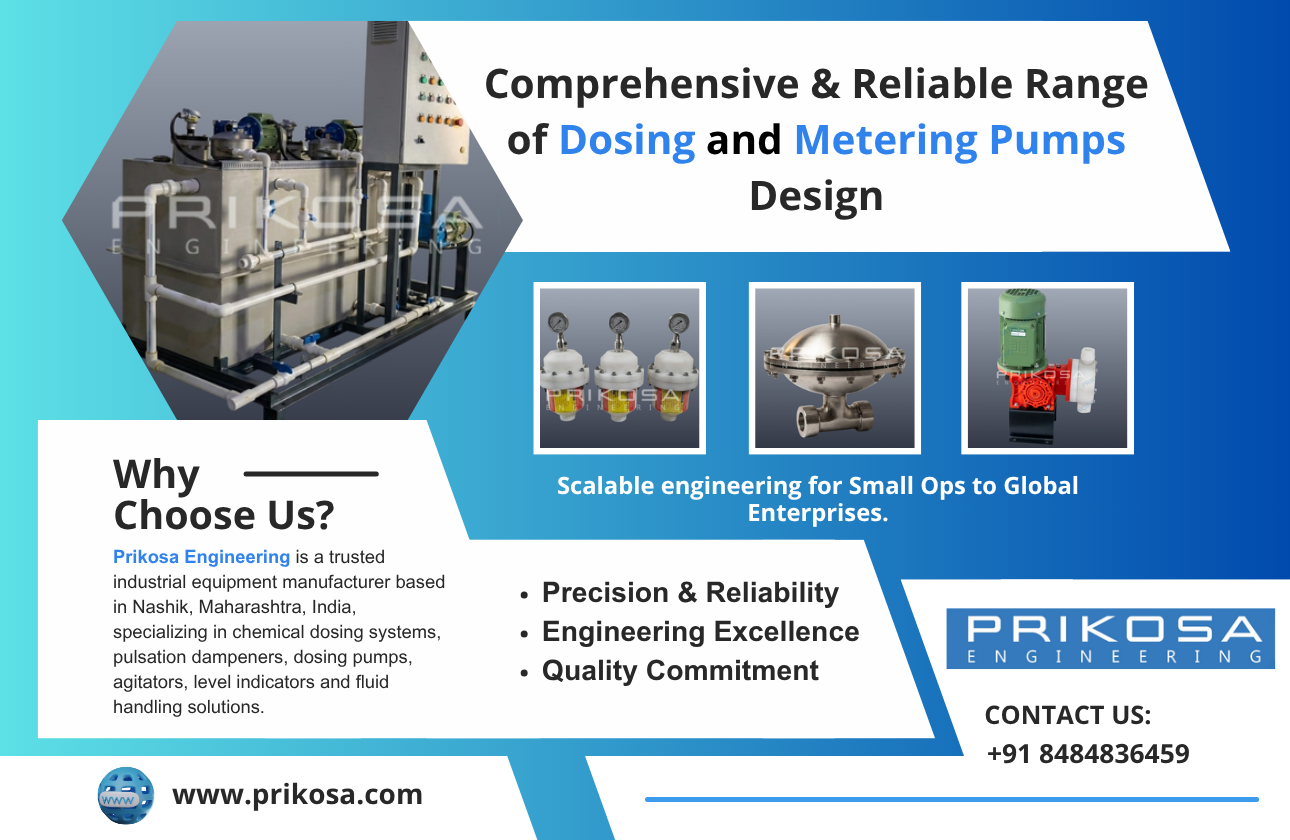
What Are HP Dosing Systems?
In industrial applications, particularly in water treatment and chemical dosing, HP (High Pressure) dosing systems play a crucial role. They are designed to handle liquids under high pressure conditions. The high-pressure environment allows for precise control and distribution of chemicals, which is critical in processes like water treatment, oil & gas, and food industries. These systems ensure that the right amount of chemical is injected into the system which helps in maintaining optimal conditions for the industrial processes. The reliability of HP dosing systems makes them a preferred choice for industries that require high precision and control.
Applications of HP Dosing Systems
HP dosing systems are commonly used in industries where the dosing of precise chemicals under pressure is required. This includes applications in water treatment facilities to ensure safe drinking water, and in the oil and gas sector to prevent corrosion by injecting inhibitors. They are also found in the food processing industry to maintain food safety standards. The advantage of HP dosing systems lies in their ability to operate under high pressures, which allows them to deliver chemicals accurately over long distances without losing any of their potency. This ensures that large-scale operations remain efficient and cost-effective.
Advantages of Using HP Dosing Systems
The primary advantage of using HP dosing systems is their ability to handle chemicals at high pressures, ensuring higher accuracy and efficiency. Because these systems can operate under high pressure, they are less prone to leaks, which translates into safer operations. Additionally, their durability in high-pressure environments means reduced maintenance costs over time. Automated controls can also be integrated into these systems, providing enhanced management and reducing human error. For industries that require stringent safety and quality standards, this is a significant advantage, making HP systems a critical component in maintaining operational integrity.
Understanding LP Dosing Systems
On the other side of the spectrum, we have LP (Low Pressure) dosing systems, which are designed for applications that require lower pressure levels. These systems are typically used in situations where chemical distribution does not need to be forceful or over long distances. Ideal for smaller scale operations, LP systems offer precision in chemical dosing where high pressure is neither necessary nor beneficial. Their design simplicity often makes them easier to maintain, operate, and troubleshoot compared to their high-pressure counterparts.
Applications of LP Dosing Systems
LP dosing systems are widely used in applications such as municipal water treatment, where the focus is on disinfection and pH adjustment. Their ability to deliver low-pressure chemical dosing ensures that chemicals are spread uniformly, which is essential for achieving balanced water chemistry. Besides water treatment, LP systems are also suitable for use in agriculture, manufacturing, and small-scale food processing industries. In these settings, they help in precision application of fertilizers, additives, and preservatives, thus optimizing the input costs while maintaining efficacy and compliance with industry standards.
Choosing Between HP and LP Dosing Systems
Deciding between HP and LP dosing systems largely depends on the specific requirements of the operation at hand. For large-scale, high-pressure chemical dosing needs, HP systems are more suitable. These systems are robust and can withstand high-pressure environments, providing precision and efficiency in dosing. Conversely, for settings where low-pressure dosing suffices or is advantageous, LP systems are appropriate. They are generally easier to manage and maintain, and are suitable for operations that do not require intensive pressure. It's essential to assess the specific needs, such as the type of chemicals required, the dosing volume, and operational conditions to make an informed decision.
Frequently Asked Questions
1. What is the main difference between HP and LP dosing systems?
Answer: The primary difference lies in their pressure handling capabilities. HP systems are designed for high-pressure conditions, enabling precise and efficient chemical dosing over large distances. LP systems function under lower pressures, suitable for short-distance and small-scale operations where intense pressure is unnecessary.
2. Why are HP dosing systems preferred in the oil and gas industry?
Answer: In the oil and gas industry, HP dosing systems are preferred due to their ability to handle the harsh conditions present in these environments. They efficiently inject corrosion inhibitors and other chemicals under high pressure, ensuring operational safety and longevity of infrastructure.
3. Can LP dosing systems be used in large-scale operations?
Answer: While LP dosing systems are typically not used in large-scale operations due to their low-pressure limitations, they can be employed in specific areas of a larger system where high-pressure dosing is not required. They are better suited to small-scale or low-pressure needs.
4. What are some industries that benefit from LP dosing systems?
Answer: Industries such as municipal water treatment, agriculture, and small to medium-sized food processing benefit from LP dosing systems. These settings often require low-pressure dosing to ensure uniform chemical distribution and precise application.
5. Are HP dosing systems more expensive to maintain than LP systems?
Answer: Generally, HP dosing systems can be more costly to maintain due to their complexity and the high-pressure conditions they operate under. However, their durability and efficiency may offset these costs over time by providing reliable performance and reducing the need for frequent repairs.